


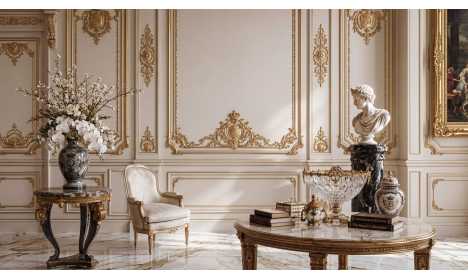
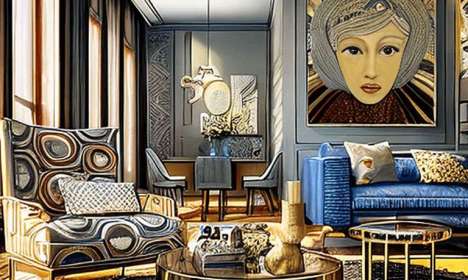

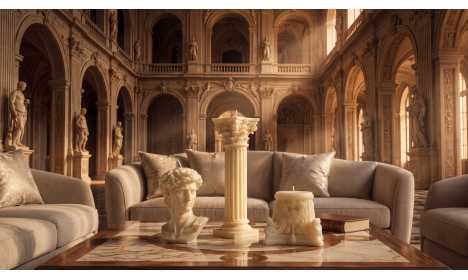
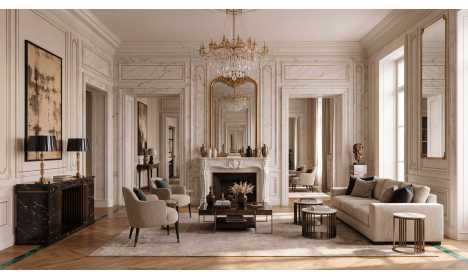
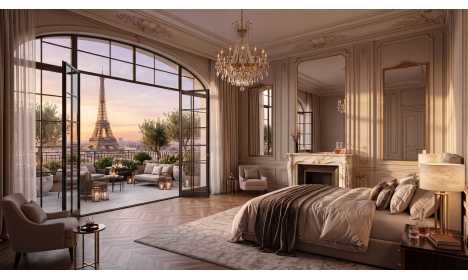
Decorating your interior with rare collector's pieces

A rare piece does not decorate an interior: it reveals it. Whether a work of art, an antique or a limited edition, the exceptional object lends a space a soul that nothing else could imitate. Here is how to choose, stage and let these rarities converse to compose a truly singular interior.
Why incorporate rare collector's pieces into your decor
In a high-end interior, the furniture sets the scene; the rare piece, by contrast, tells a story. It is what the eye seeks upon entering, and it is around it that conversation gathers. Where luxury decor can be reproduced, a unique piece remains inimitable: it imprints a signature and a character that no one else possesses.
What sets a collector's object apart from a mere decorative one comes down to three words: rarity, provenance and emotion. A patinated bronze sculpture, a studio ceramic or an antique with a documented past carry within them the gesture of an artist, the weight of an era, sometimes the trace of a former owner. This emotional charge turns a purchase into a transmission.
Finally, exceptional decorative pieces represent heritage value as much as a long-term aesthetic investment. A work chosen with discernment outlasts trends, growing richer in the eye and, often, in its market value. To decorate with rare works of art is to combine everyday pleasure with the building of an enduring legacy.
What gives a rare collector's piece its value
The first guarantee of a rarity is its authenticity. Certificates of authenticity, the artist's signature, the numbering of limited editions and the traceability of provenance all attest that a piece is indeed what it claims to be. These documents are not mere formalities: they underpin trust and resale value.
Next comes craftsmanship and the nobility of materials. The most coveted art objects in decoration are born of a dialogue between the hand and the material:
- bronze, whose patina is nourished by time;
- marble, carved or polished, with its precious coolness;
- crystal, captured and multiplied by the light;
- fine woods, whose grain signs the uniqueness of each piece.
Finally, history and rarity complete the value. Original works of art, antiques and rare objects, limited-edition creations: the more singular the example and the better documented its narrative, the more it asserts itself as a true collector's decoration. Our world of rarities and exceptional objects brings together precisely those pieces whose value lies in their singularity.
How to choose a rare piece suited to your interior
First and foremost, define the spirit you are seeking. Will the piece be a major focal point that structures an entire space, or a precious detail slipped into an already composed setting? This intention guides scale, placement and budget.
Next, harmonise style, period and materials with your existing decor. A rarity need not fade into the background: on the contrary, it can create a happy contrast. But the dialogue must remain measured, whether through a material, a hue or a line echoed elsewhere in the room.
Scale and proportion are decisive. Think of the object in its volume: an imposing sculpture suffocates a cramped corner, while a piece that is too discreet gets lost in a large drawing room. Measure, visualise, and grant each rarity the breathing space it deserves.
Finally, favour coherence over accumulation. A collection is built around a guiding thread — a period, a material, a craftsperson, a theme. The pieces from our selection of fine craftsmanship and studio creations fit naturally into this overall logic rather than into the mere addition of objects.
Staging a collector's piece: the art of presentation
A poorly lit work is a work only half seen. Exhibition lighting elevates a piece as in a gallery: a directed beam, warm raking light to reveal the reliefs, controlled intensity to avoid glare. A carefully chosen exceptional lighting scheme radically transforms the perception of an art object.
The support, in turn, is part of the work. A base, console or pedestal isolates the piece, raises it to eye level and lends it a museum-like presence. Choose an understated support that serves the object without stealing the show.
Play on contrast as well: a rare piece set against an uncluttered backdrop gains in impact. A neutral wall, a clear volume, and the eye has no escape but the work itself. The emptiness surrounding it is not a lack but a setting.
For lovers of learned profusion, the contemporary cabinet of curiosities offers an enticing alternative: gathering and letting several rarities converse — minerals, bronzes, art objects — within a single display case or a staged shelf, where each piece answers the others.
Pairing rare pieces with luxury decor, room by room
In the drawing room, the work of art or sculpture becomes the heart of the reception space. Placed above the fireplace, on a central console or as a counterpart to a sofa, it anchors the space and orients the entire composition.
In the entrance hall and gallery, the first impression is decisive. A rarity welcomes the visitor and immediately establishes a sense of prestige. It is the ideal place for a striking piece, seen both from afar and up close.
The study and library lend themselves to art objects and rarities arranged at eye level: a bronze on the ledge of a shelf, a collector's object set beside the bindings. These intimate spaces call for pieces to be contemplated at length.
Finally, the dining room calls for exceptional pieces to grace a ceremonial table. A surtout, a sculptural centrepiece or a rare service extends the emotion of the collection into the art of entertaining — a refinement cultivated by our world devoted to the exceptional art of the table.
Preserving and caring for your collector's pieces
Conservation determines the longevity of a rarity. Three factors deserve constant attention:
- light: keep fragile works away from direct sunlight, which alters pigments and materials;
- humidity: a stable humidity level protects woods, papers and canvases from warping and mould;
- handling: pick objects up with both hands, by their sturdiest part, ideally with gloves for sensitive surfaces.
Caring for noble materials calls for restraint: gentle dusting with a brush or a lint-free cloth is most often enough. Avoid abrasive products and entrust the most delicate works to a professional restorer.
Lastly, remember to document and insure your collection: photographs, invoices, certificates and up-to-date valuations make insurance easier and, when the time comes, the transmission or resale of your pieces.
Surrounding yourself with exceptional expertise at Maison Imperiale
Choosing a rarity requires a trained eye. Maison Imperiale brings together a selection of rare and authenticated works of art, each accompanied by its provenance and guarantees, to offer you the peace of mind such a choice deserves.
Beyond the object itself, we support collectors and lovers of high-end interiors with tailored advice: help with choosing, projecting the piece into your decor, recommendations on staging. Our role is to bring about the perfect encounter between a piece and a place.
Let yourself be carried by the emotion of a unique piece: explore our collection of rarities and works of art now, and speak with our experts to compose an interior in which every object has something to tell.
In Same Category
- Sculptural Candles and High-End Luxury Wax Art | MAISON IMPERIALE
- MAISON IMPERIALE | The Benchmark of Decorative Luxury Interior Design
- Luxury Room : Create a Personal Sanctuary | MAISON IMPERIALE
- Luxury Decor Trends 2026: High Craftsmanship by MAISON IMPERIALE
- Biophilic Architecture and Natural Decor | MAISON IMPERIALE Luxury Home Decoration